UDC expands local manufacturing in Uganda
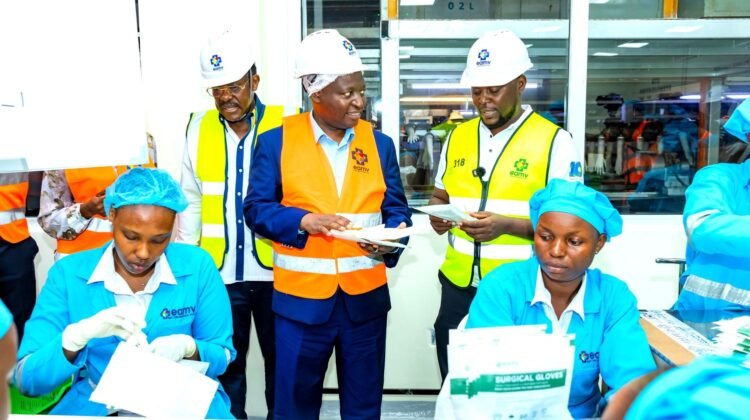
NAMANVE: Industry State Minister David Bahati has commissioned Production Line 2 and presided over the groundbreaking of Production Lines 3 and 4 at the East African Medical Vitals (EAMV) in Namanve, marking a significant milestone in Uganda’s local manufacturing of essential medical supplies.
The expansion demonstrates the impact of government investment through the Uganda Development Corporation (UDC), which invested Shs21.4 billion in EAMV in 2023 through equity and debt financing, supporting the installation of Production Line 2 and providing working capital.
The UDC Executive Director, Dr Patrick Birungi, said the investment was intended to build local manufacturing capacity for medical supplies traditionally imported into Uganda. He said that the investment strengthened the company’s production capacity, supported employment and enhanced Uganda’s ability to meet domestic demand while reducing dependence on imported medical gloves. This is part of UDC’s 10-year celebrations, including project tours to showcase UDC investment impact
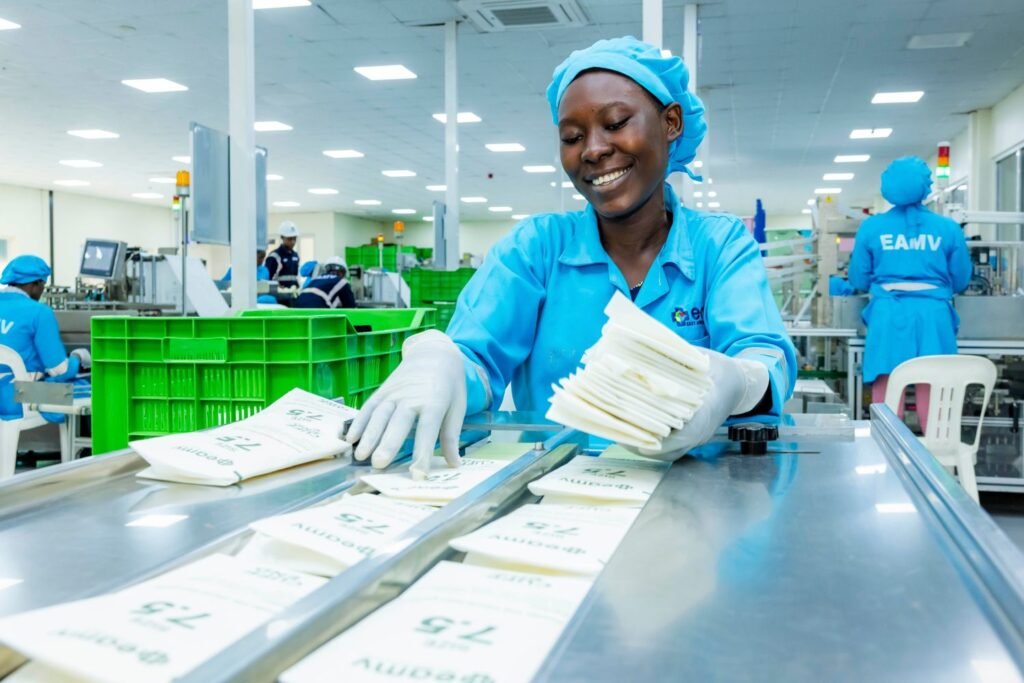
EAMV management applauded the government and UDC for the investment, adding that their support had enabled the company to optimise its operations and achieve profitability. The company expanded from an initial production capacity of 36 million pairs to approximately 80 million pairs of gloves annually.
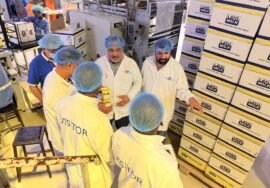
According to EAMV management, the company is expanding production capacity as well as strengthening the entire value chain of locally manufactured medical supplies. EAMV produces about 80 million powder-free latex surgical gloves annually, meeting nearly 70 per cent of Uganda’s domestic demand and saving an estimated $17.8 million in foreign exchange every year. The benefits include value addition, import substitution, job creation and health security in practice.
EAMV is a medical consumables manufacturing plant that produces examination and surgical gloves. UDC’s investment is geared toward increasing the company’s production capacity and is expected to create jobs as well as save foreign exchange for the country through import substitution.