Uganda marks MSME Day calling for formalisation
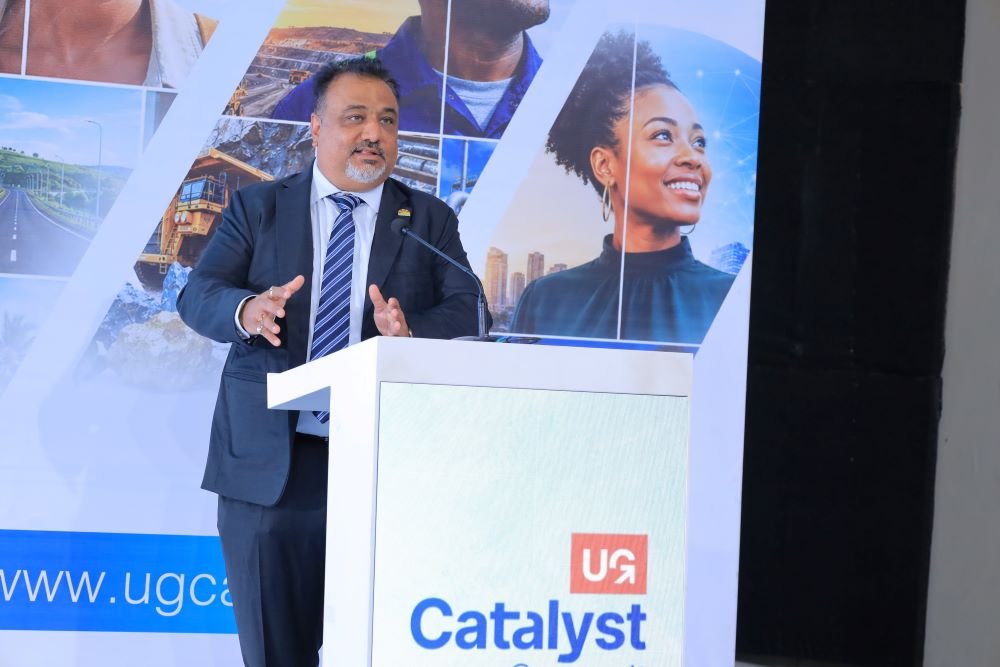
Minister of Trade Industry and Cooperative Sanjay Tanna
The inaugural Uganda Catalyst Summit officially opened on June 25, 2026, at MoTIV Hub, Bugolobi, bringing together government leaders, private sector actors, investors, development partners, entrepreneurs, and ecosystem builders for a high-level national platform designed to translate Uganda’s National Development Plan IV (NDPIV) priorities into measurable enterprise outcomes.
The summit, running from June 25 to June 26, 2026, was convened under the theme “Catalysing Action for Growth: Accelerating Uganda’s Tenfold Growth through Innovation and Entrepreneurship”, serving as the anchor event for the United Nations Micro, Small and Medium Enterprises Day commemorations.
The summit was a collaborative initiative of the Ministry of Trade, Industry and Cooperatives, the National Planning Authority, the Innovation Village Hub, and the Global Alliance for Improved Nutrition (GAIN), among others. It is anchored in the four priority sectors identified under Uganda’s growth agenda: Agro-Industrialisation, Tourism, Mineral value addition, and Science, Technology, Innovation and CCIs – recognised as key drivers of Uganda’s ambition to achieve tenfold economic growth through increased productivity, value addition, enterprise development, innovation, and market expansion.
Opening the summit, the Minister for Trade, Industry and Cooperatives, Mr Sanjay Tanna, underscored the critical role that MSMEs play in Uganda’s economy. He noted that MSMEs constitute about 99 per cent of all businesses in the country, contribute about 75 per cent to the national GDP, employ over three million people, and generate more than 80 per cent of domestic revenue.
The minister acknowledged the persistent challenges, including limited access to affordable credit and markets, low adoption of modern and digital technologies, climate change-related disruptions, informality, and complexities of meeting international quality standards. However, he noted that Uganda’s MSMEs have shown remarkable resilience, and the government is committed to transitioning them from subsistence to competitive and export-oriented entities. Mr Tana cited government wealth creation initiatives such as the Parish Development Model (PDM), Emyooga, Business Development Services, and the Small Business Fund to the tune of over Shs200 billion. These target 50,000 MSEs with quotas for women and youth.
On Day Two, Uganda joined the rest of the world in commemorating the United Nations MSME Day, with stakeholders from government, the private sector, and development partners calling for enhanced support to MSMEs as drivers of economic transformation and sustainable development. This year’s UN MSMEs Day was commemorated under the theme, “Reducing barriers for MSMEs to enter formal economy: Formalise to rise,” which aligns with Uganda’s ongoing efforts to transition informal businesses into the formal sector to unlock their full potential. The day marks nine years since the UN officially designated June 27 as MSME Day on April 6, 2017, to recognise the global economic contributions and importance of small businesses.
The Minister of State for Industry, Mr David Bahati, who was the guest of honour, underscored the significant contribution of MSMEs to Uganda’s economy. He noted that the sector comprises about one million enterprises contributing 75 per cent to the GDP and employing about 2.5 million people, equivalent to 90 per cent of the total non-farm private sector workforce.
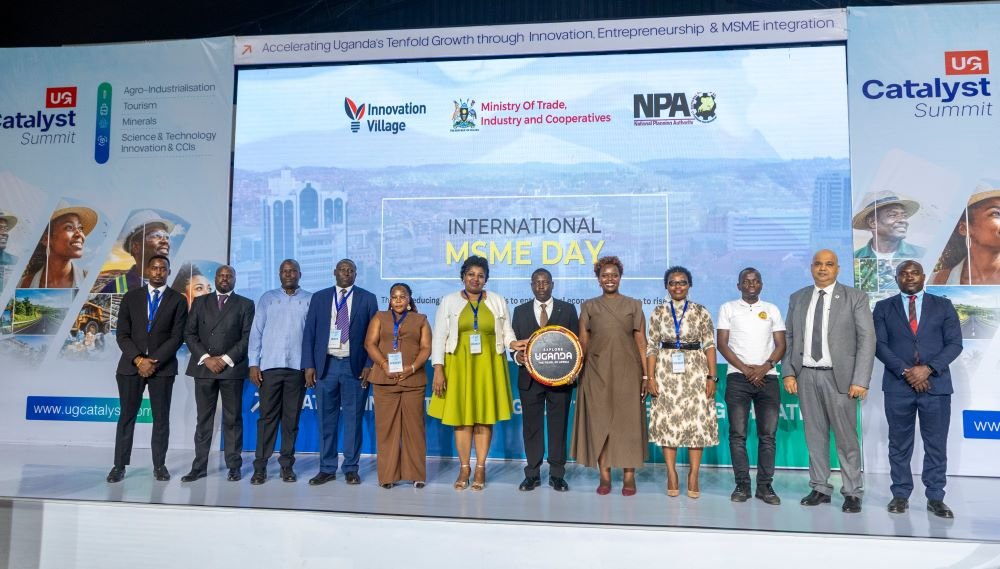
“Together with enterprise support agencies and MSMEs around the world, we celebrate this day to raise public awareness of how MSME businesses drive sustainable development goals, contribute to sustainable development and generate local employment,” Minister Bahati said.
He highlighted several government initiatives aimed at supporting MSMEs, including the establishment of skilling hubs through Presidential Initiatives, business incubators, industrial parks, and financing schemes such as Emyooga and the PDM, which target youth, women, and persons with disabilities.
Ms Rita Ngenzi, the Executive Director of The Innovation Village, emphasised the importance of collaborative action in achieving national development goals. The Innovation Village has worked with over 300,000 entrepreneurs and innovators across Uganda over the past decade through its footprint in Kampala, Bwera, Gulu, and Jinja.
“The true value today will be measured by what follows: the partnerships strengthened, the initiatives advanced, the enterprises supported, the opportunities created for Ugandans across the country.”
Ms Damalie Ssali, the Country Director of GAIN Uganda, said that the role of MSMEs extends beyond economic contributions to encompass public health and nutrition security. She noted that MSMEs are not merely value chain enterprises but are public health champions that shape food systems to deliver nutritious and healthy diets to communities across Uganda.
Ms Sarah Kagingo, who represented the Private Sector Foundation Uganda Executive Director, said that the private sector is becoming a key partner in the implementation of Uganda’s Tenfold Growth Strategy. She emphasised that for the private sector to effectively drive economic transformation, there is a pressing need for an enabling environment that allows businesses to acquire expertise, expand their operations, and compete both regionally and internationally.
A major highlight of the summit was the official launch of the Opportunity Dashboard, a national intelligence platform designed to provide real-time sector insights, enterprise pipeline visibility, market opportunity mapping, and performance tracking. The platform will support evidence-based decision-making and enable stakeholders to measure enterprise contributions to national growth targets.